For as far as many of us can remember, the voting age in Washington has always been 18 years old. In 1971, the voting age was lowered to 18 with the passage of the 26th Amendment. This was because of a movement that requested the age of voting be changed from 21 years old to 18 years old; with many slogans accompanying the movement such as “Old enough to fight, old enough to vote” during the height of the Vietnam War. The 26th Amendment of the U.S. Constitution states that: “The right of citizens of the United States, who are 18 years of age or older, to vote shall not be denied or abridged by the United States or by any State on account of age.”
Because of this amendment’s deep roots, it’s probably fairly clear that it took time for the amendment to finally come to fruition. U.S. Representative Jennings Randolph had introduced to legislation the idea of lowering the voting age, in which he had to do 10 times. And in 1943, Georgia became the first state to change the voting age to 18 for both state and local elections. President Dwight D. Eisenhower was the first president to publicly support prohibiting age based voting denials for those who are 18 and older.
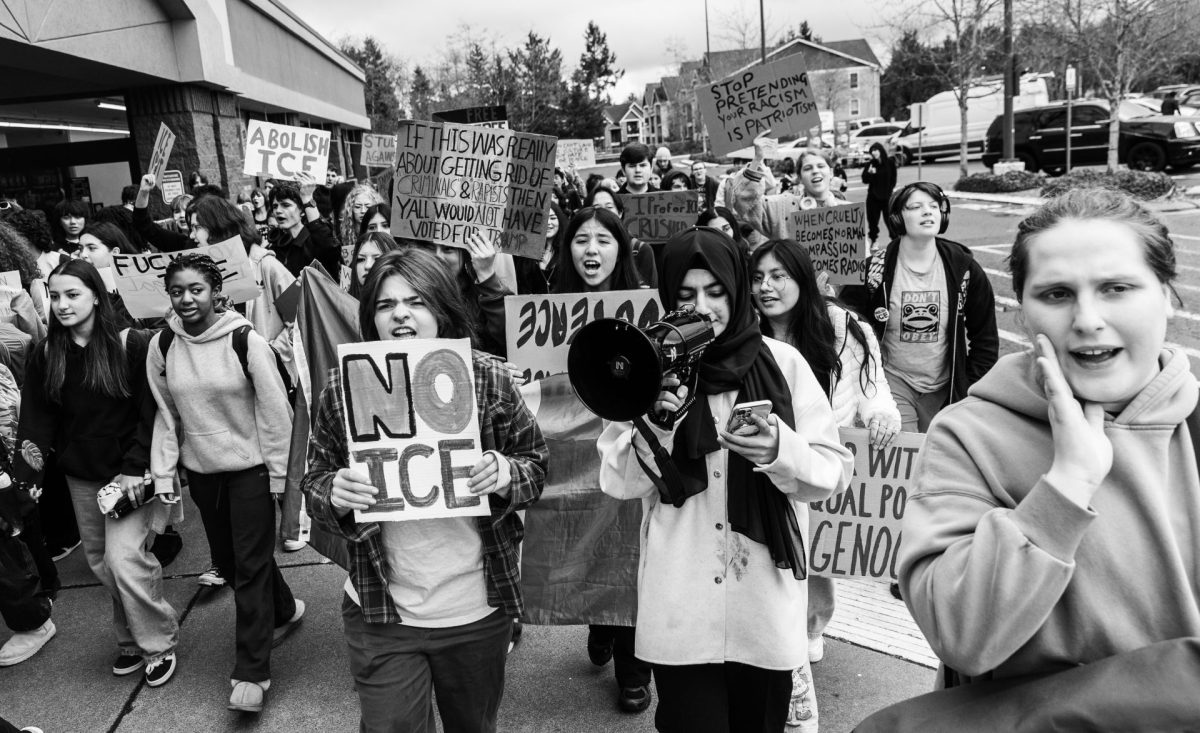
And so understanding the history behind the legal voting age, we come back to the present. Many may have heard of the term “youth rights,” which entails that young people should have the same rights as adults, as many rights, such as the right to vote, are traditionally reserved for adults. The youth rights movement aims to grant youth the liberty to make their own decisions autonomously, as adults are already able to.
So, thinking about this, it’s a wonder why in this day and age, high schoolers at least, are unable to vote. As soon enough, we’ll all be adults with the right to vote. But why must we wait four years to do so? Many high schoolers, as one would at least hope, are able to make critical and logical decisions as such is ideally needed for voting. So if at least most high schoolers are able to do just that, why not teach us how voting will work and how to understand a ballot.
So, looking deeper into this, what are the pros and cons? Well some pros of youth voting are encouraging youth voices, allowing youth to have a say in decisions that impact their lives now and in the future, and encouraging youth to be interested in politics that will affect the world around them. And, of course, there are cons. Some of which are brain development, because although youth can be very mature when talking about politics (and sometimes more mature than adults), their brains are still developing as well as learning. Some youth may also lack an understanding of how the “read world” works, like economic independence and intricate political issues. Youth can also be easily swayed by social media, parents, etc. if they don’t look at multiple credible news sources to get the full understanding.
So how have other voting rights changed? Well, digging into more voting history, voting rights for women as well as black people have also changed.
The 19th amendment, which was ratified on Aug. 18, 1920, gave women the right to suffrage, aka, voting. Making this possible was difficult though, as it took decades of agitation and protest. And it all began in the mid-19th century with what was seen as radical to Americans. Through marches, lectures, civil disobedience, etc., they eventually achieved what they were fighting for for so long in 1920, with only few supporters living to see the final victory.
So how did African Americans get their right to vote?
Well, prior to the Civil War and the reconstruction amendments to the U.S. constitution, some Black people were able to vote in the United States, however this right was constantly abridged or even taken away.
And after 1870, Black people were technically equal because of the 15 amendment – “No person can be denied the right to vote because of race, color, or previous slavery.”
But because of the period between the end of the reconstruction era and the passage of the Civil Rights Act of 1964, the amendment was often infringed in its practice.