Archive for the 'Health' category

Body Language: Unspoken Communication

There are about 6,912 languages around the world being taught, read, spoken and written. With so many languages circling around the globe it is inevitable that there would be miscommunication. However, one language is often overlooked and although it is not a spoken language it can be communicated to other people unconsciously – the art of body language.

Body language can be as simple as moving your hand toward your mouth or picking at your sleeves, everyday little habits, yet it gives people a better look at your character or your mood.

Some of the most overlooked body language is how people use their legs and their posture. Even though the legs can often be overlooked, they  the exclamation point in a conversation or when hanging out in a group. Mostly they show whether a person is open and comfortable with the people around them or if they are negative and uncertain. Sometimes the legs can even reveal if a person is actually focusing or if they are daydreaming. For example, as Matthew McKay states in his book “Messages: The Communication Skills Book” when a person’s feet are pointing

in a specific direction, that is usually where their mind is focusing. When a person is speaking with someone and are interested in what is being talked about, that person’s dominant foot is pointing toward the other person. And if the person wishes to leave the conversation, the dominate foot points away. Whereas a person stands near someone and their feet are set firmly and far apart, they are showing that they are aggressive in nature, and usually dominate. When someone is sitting down or standing up and they are crossing their legs, it shows that they are submissive, defensive or close minded. The most common use of legs are when people are shaking or twitching their foot whether they be sitting or standing. This constant state of motion in the legs usually means anxiety or impatience. Moving up on the body language scale, people notice arm or hand movement a lot more than they notice leg motions. Gregory Bateson, a famous anthropologist, stipulates in his book, “Communication: The Social Matrix of Psychiatry”, that the use of arm or hand body language is mostly used for defensive tactics that the brain subconsciously sends to our arms and hands. For example, when someone crosses their arms over their chest, it mostly means that the person feels threatened or nervous. If someone’s arms are

crossed over their chest and they are making fists with their hands, it means that they are feeling extreme hostility toward someone or something. If someone only has one arm crossing their body and holding the other arm it represents a distressful moment or that they are insecure. Interestingly enough, when two people are hugging and one begins to pat or tap the back most people see it as affection when in reality it is used when the person wants the embrace to end. Ray Birdwhistell, the founder of the study of kinesics (study of human body language), wrote that he first noticed that people use their hands a lot more when they talk about something they are passionate about or trying are to elaborate on. The hands are more broadly used than any other

body part when people are trying to convey their feelings. For example, when a person shows their palms toward another person this shows that the person is unconsciously inviting trust, and when the palms are hidden, it means that the person isn’t willing to trust the other person. If the palms are faced downward when someone is outstretching their hands, it shows that the person feels superior and dominating. The most powerful body language we perceive are the eyes; they convey our thoughts and emotions a lot more than people might think. If one is talking in a conversation and they look up and to the right then usually it means that they are embellishing or using their imagination. If the eyes go to the lower left corners of their eyes they are searching

their memory, and when a person avoids eye contact altogether ,they are showing that they are either not willing to show their emotions, or are lying. And usually when a person hears something that they do not believe, they raise their eyebrows. Cambridge University Press printed a paper called the “ Pupillary System” which asserts that the most interesting part of peoples’ eyes are the pupils because they are uncontrollable; you cannot fool people easily with them. For example, when a person feels sexually aroused or excited, their pupils will dilate; and

when they feel angry, their pupils will become smaller involuntarily. The most recognized eye movement is the wink; the wink is associated mostly with attraction and affection for a certain person. Being aware of body language can help if someone is trying to succeed in social situations such as job or college interviews, the work environment, or being introduced to a new person. Body language can be as simple as moving your hand toward your mouth or picking at your sleeves, everyday little habits, yet it gives people a better look at your character or your mood.

Body language facts

1. Pulling on ones ear usually means indecision

2. Repeatedly shifting body weight from foot to foot a

gesture that generally indicates mental and physical

discomfort.

3. When talking with someone and the persons legs are

crossed toward the person they are talking to they are

interested in the conversation or the person (does not

have to be a sexual interest.)

4. When someone touches or slightly rubs their nose

usually they are doubtful of what they are being told,

or if they are the one talking and touching or rubbing

their nose then they are most likely lying.

5. When someone is clasping their hands behind their

back, generally it is out of Anger, frustration, or

apprehension.

Source: center-for-nonverbal-studies.org

Gender determines strengths, attractions

The birds and the bees has long been a major topic among teens. Girls develop breasts while guys get deeper voices. But does Billy really like your black dress? Does Sally think it’s hot when you wear Axe? The truth is, each gender has a different perspective and acts with different motives. The “girls are from Venus boys are from Mars” phrase might be an exaggeration,

but the main idea is correct – the genders are different physically and mentally. According to Simon Baron-Cohen, the author of “The Essential Difference: Men Women and the Extreme Male Brain,” the female brain has stronger empathizing tendencies. So, do not make fun of a girl crying at the end of “Marley and Me” she cannot help it. Females also have a larger corpus collosum, a structure of the brain that connects the left and right hemispheres. This means that women can transfer information between the hemispheres faster than males. On the other hand, the male brain, according to Cohen, has systemizing tendencies. A study at Cambridge University showed that girls looked at faces longer than boys, and boys looked at machinery longer than girls. Inside the female brain the limbic system, involved with emotions and motivations, is bigger. This explains why they are better at bonding, identifying

and connecting with others. Women have 12 percent more neurons than men. These neurons are clustered together in areas representing the transferring of information within the brain.

At Vanderbilt University, researchers Stephen Camarata and Richard Woodcock found that females performed better in timed tests. In standardized tests that focused on processing speed, female adolescents scored on average 105.5, males 97.4. Women utilize both hemispheres for language, too. The areas in the frontal and temporal lobes representing language are much larger in women than men. Therefore, women’s reading and verbal skills outshine men. However, men tend to do better in math. On the SAT test, men surpassed women on the math portion by an average of 35 points. There is a part of the brain called the inferior-parietal lobule that is larger in men than in women. This section of the brain is thought to be associated

with mathematics. In a study done at Harvard in 2001, researchers discovered that the parietal cortex was larger in men than women. The parietal cortex is involved with spatial organization. The male brain excels at mechanical thinking. Men are motivated to analyze and build a system and to figure things out. Men have 6.5 times more grey matter than women, which means they have more areas to process data. But what makes a man attracted to a woman or vice versa? According to Mark J. Taylor, author of “A Psychological Look at What Causes Attraction – Cracking the Root Causes of Attraction,” one of the main causes of attraction is proximity, how close people are to each other. For example, where you go to school makes attraction more likely with a classmate than someone who lives across the world. Next is association, if people meet their significant others at a park in the summer when they’re having fun they are more likely to be attracted than if they had met at a vet clinic after they had to put a pet to sleep. When and where people meet determines what they associate with that person.

Human beings also respond to scent, according to the Smell and Taste Research foundation in Chicago. Males are attracted to lavender and pumpkin scents, so the males out there might want to check the ingredients in their favorite body spray, while females are attracted to the scent of cucumbers and black licorice. Another fun fact is males are attracted to the color red

because in Western culture it symbolizes romance and passion. To be clear, someone smearing himself or herself with pumpkin pie and wearing a red t-shirt cannot guarantee that their crush will fall for them, but it will definitely get them noticed. Not all these findings apply to everyone. They are sweeping statements of the typical society. A male may not have typical male characteristics and a female typical female characteristics. These studies are attempts to explain general gender- based behaviors.

Alcohol

The year 2009 has come with some very big surprises; the first black president, an amazingly high number of reality shows, and half naked girls selling coffee.
Although many people could argue that the things previously listed are great, most can agree the increase in teen alcohol abuse is not one of them. Finding a 13-year-old girl downing a bottle of Grey Goose in a bathroom would seem to be a very unlikely and disturbing scenario, but the truth is it happens. What can adults do to stop it? Nothing. There will never be a time where underage drinking ceases to exist.
But what adults can do is educate adolescents on alcohol and its effects instead of trying to prevent the inevitable.
A person can walk through Mountlake Terrace High School and if they listen it’s very likely they will hear something somewhere along the lines of the following: “Dude it was so crazy I could barely stand. I had like five shots of Captain [Morgan’s] yeah I was so plastered, it’s like 70 proof!”
But what many students lack in understanding is that proof is not percent, if this were true Captain Morgan’s would be just 30 percent away from rubbing alcohol. So here’s the down low on alcohol proof. In the United States proof is measured at a 2:1 ratio meaning if the alcohol is 70 proof it’s 35 percent alcohol. An easy way to remember is what ever the proof is it’s exactly half of that in percent of alcohol.
According to about-alcoholism-info.com “Those who start drinking before the age of 15 are four times more likely to manifest serious alcohol side effects such as dependency.” In other words, this means that that same 13-year-old girl drinking Grey Goose in a bathtub is four times as likely to be an alcoholic.
Why is that? A common incident among young adults is that they use alcohol to make them feel better. For example a girl just broke up with her boyfriend and seeing as how she connects alcohol with fun and partying she thinks drinking will make her feel better. But the truth is alcohol is a known depressant. Common immediate effects of consuming too much alcohol are a lack of attention and a slow reaction speed.
What’s the big deal?
It may not seem like hard-core consequences, but when they are affecting an adolescent in an unsafe environment like a party they can have dire outcomes; lack of attention means a date rape drug could be slipped in a drink, a slow reaction speed while driving could leave a teen wrapped around a tree. Both of these examples are things that can change lives forever. Long-term effects of alcoholism include: cirrhosis of the liver, pancreatitis, epilepsy, alcoholic dementia, heart disease, increased chance of cancer, and sexual dysfunction.

Drinking may be fun and may make teens think they’re so grown up, or more important or cooler. Still, according to alcoholalert.com, as of 9:28 p.m. Oct. 12, 10,143 people have died in drunk driving accidents this year and the number grows everyday. According to the U.S. Department of Justice, in 1994 45 percent of rapists were under the influence of drugs or alcohol.

Alcohol is not a game. How much proof do you need?

Health Blurb; Why do we get scars?

The famous boy-wizard Harry Potter has his iconic lightning-bolt scar, inflicted by a Dark Wizard when he was a baby. However, it doesn’t take a spell to cause scars to form on your body. Scars are created when your skin gets torn, be it by a knife or a stray piece of sharp wood. However, unlike paper cuts and shallow skin injuries, the deeper layers of skin beneath the dead skin cells – the dermis – are damaged.
After the injury heals, the scar leaves behind a trace of what the wound was; how bad the trace is depends on how bad the injury was. Scars are generally flat and paler than the skin surrounding them. Why do scars look like this, and why do they form in the first place? When the dermis is torn, the body has to create new fibers of the protein collagen (the same stuff that forms your lips) to fix the damage. However, since the human body can’t repair the damage so it looks like it did beforehand, the scar appears as a result.
There are ways to remove scars partially (there is yet to be a way to remove them all the way), steroids, needling, and surgery being a few of them. However, these should not be done without consultation with a doctor.

The down low on the Raw

As the food radar continues to expand, people have broken away from the typical diet and created new ones. From the simple healthier diet to one that would help people lose weight. Among these are the South Beach diet, the Atkins diet, as well as veganism  and – a most unique one – the “raw foods” diet.

The Raw Foods Diet is almost self-explanatory – it contains unprocessed and uncooked plant foods, such as fresh fruits and vegetables, nuts, sprouts, grains, seeds, beans, dried fruit, and seaweed; everything in a raw or natural state. People consuming a raw foods diet eat all of the above, as well as drink freshly squeezed juices, purified water, and young coconut milk. The fruits and vegetables are preferably organic. Consumers of the raw food diet ultimately have to give up meat and dairy. Food cannot be cooked or processed at a temperature higher than 116 degrees Fahrenheit, as it is believed that cooking foods kills important nutrients as well as enzymes that help in digestion and absorption of foods. While this proves true in most cases, there are certain foods, such as tomatoes and carrots, which have a higher nutritional content when cooked.

There are benefits to the raw food diet. Studies show that with a diet in all raw foods, people had lower cholesterol and a higher vitamin A level, which helps protect against chronic diseases. This diet was also low in Trans fat, saturated fat, sodium and sugar, and high in fiber, potassium, and health-promoting nutrients found in raw fruits and vegetables called phytochemicals. Eating raw fruits and vegetables has also shown to reduce the risks of certain types of cancer, heart disease, and diabetes.

Cooking foods kills off harmful bacteria. With nothing being cooked at temperatures higher than 116 degrees, some harmful bacteria may not be killed. The raw food diet also lacks vitamin B12, iron, calcium, and omega-3 fatty acids. It is recommended that anyone on the raw food diet should eat foods that are fortified with these nutrients. Supplements are also highly recommended to get the needed amounts of vitamins and minerals.

So even thought there are benefits to the raw food diet it is not for everyone.

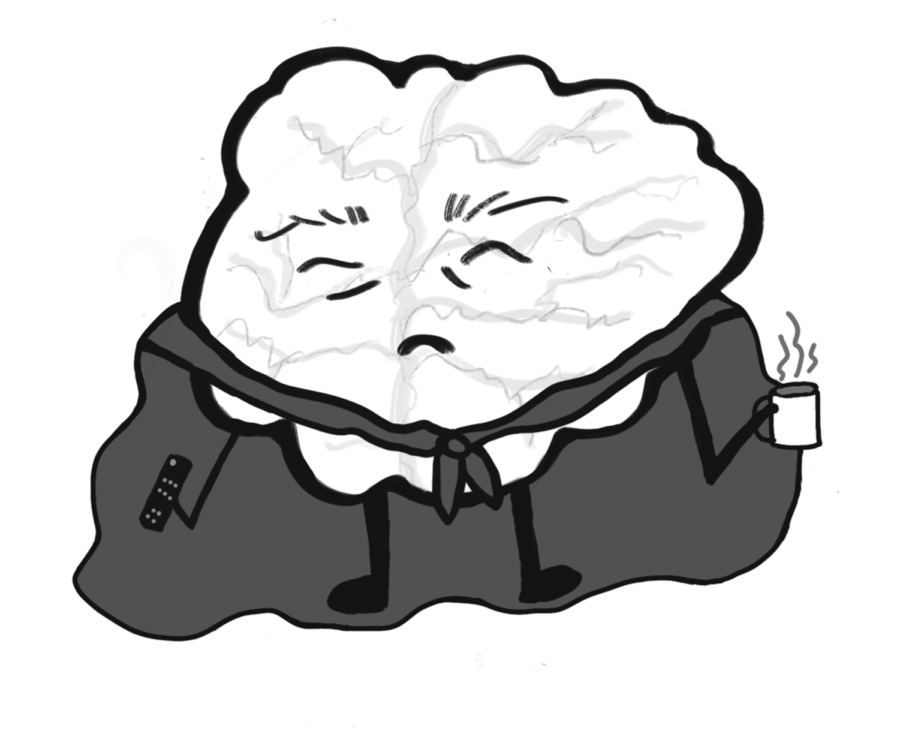
Fact or Fiction: Do we only use 10 percent of our brain?

By Suzanne Cho

Hawkeye staff

Most students at MTHS have heard that human beings do not use the full potential of their brains, but this is in fact a myth.

The brain is one of the most important organs in the human body. It controls the central nervous system. It also helps with the coordination of walking, talking, breathing and thinking. The brain is also incredibly complex. However, research has gotten humans closer to understanding how the brain works, such as how much of the brain is used, as well as what parts of the brain are being used.

The brain uses its whole capacity to perform a human’s daily activities of eating, studying, thinking, playing, and even sleeping.

Brain imaging studies show that not one area of the brain is inactive. No matter what a person is doing, their brain is always active.  Here is an example:  If a person is sitting at a table and eating a sandwich, then the person is not actively using their feet. Instead, the person is concentrating on bringing the sandwich to their mouth, taking bites of it and chewing on it. However, that doesn’t mean that their feet aren’t working there’s still activity in them, such as blood flow, even when the person is not actually moving them. This situation is exactly related to how the brain works. While a person uses a certain part of their brain to do a task, the rest is still active.

Even when a person isn’t using their whole brain at one time, multiple tasks are done.

If a person wasn’t able to use a part of their brain, it would be useless and then there would no point of the brain being there.

Many people don’t realize that they are actively using the full capacity of their brains, even doing the simple things of resting and sleeping, but recent research has proven that this is correct.

Is this Normal!?

Hi Campers,

Welcome back to a new school year. It is nice to see all your shiny faces! Sometimes summers turn out way different that you plan.

Here’s what I learned or did during my summer vacation:

•Discovered Urban Decay makeup.

• Attending or participated in a personal record number of weddings (Don’t get excited, not one of  them was mine!).

• Took care of a stroke victim.

• Learned how to edit photos on my new computer.

• I attempted to run over a rattlesnake.

• Went to the Nickelback concert.

• Left Dr. Cogburn and her dog on the side of the freeway.

• Stole a brain model.

• I got out of doing jury duty (it was canceled).

• Took field trip to a tortilla factory.

• Four wheeled through a field of poop.

• Watched season 4 of  “Lost.”

• Read lots of books and saw lots of movies.

As you can see, I didn’t do anything illegal, immoral, or down right nasty. But I did have fun and relaxed. Find me in room 135, even if I don’t know you, and entertain me with your summer stories. Where did you travel? Tell me about your family road trip. What great book or movie did you come across? And while you are thinking about telling me stories please forward the Hawkeye or me any questions related to health, relationships, or social events.

Questions Answered: The Human Body

Humans will always have questions about their bodies. Whether it’s why we have an appendix or why some people have green eyes while others have brown. The Hawkeye has uncovered the answers to a few of these mysteries.

Why do we get brain freezes?
Brain freeze is the common name of a sphenopalatine ganglioneuralgia, which is just a brief cranial pain usually following the quick consumption of a cold food or beverage. A “brain freeze” happens because something with a cold temperature has touched the palate on the inside of your mouth. This usually starts about 10 seconds after the consumption of something cold and lasts about 20 seconds.

Why does hair curl?
Hair type affects everyone, it’s based on a persons genetics. Curly unmanageable hair is not ideal but it is said that people who have tightly coiled hair (most commonly found among African Americans) are descendents from high temperature places such as Africa where curly hair protects people from the sun’s harmful ultraviolet rays. This is supported by what Govindaraja V. Iyengar author of Element analysis of biological samples found in 1998 which was that, the straight hair found among many Caucasian people allowed UV light to pass through into the skin, but the curls commonly found among black people protect the scalp. Can women with breast implants breast-feed?

Many people believe that women with implants won’t be able to breast feed but the truth is it depends. Depends on what? When a breast implant is inserted the doctor is not intending to cause any damage but that does not change the fact that this event is common.

A few not so unusual complications that occur among implant patients are scarring and nerve damage. If the natural milk ducts in a woman’s breast are damaged this can cause it to be extremely difficult and depending on the situation impossible for the woman to breast feed.

Does eating human make you crazy?
Most students have made a Hannibal the Cannibal reference. But is Hannibal’s insanity caused by the fact that he was a cannibal? Do you really go insane from eating human meat? It’s debatable on whether or not wanting to eat human is already a classified case of insanity but insanity, caused by cannibalism has not been proven.

What happens when you get a bruise?
To a medical doctor this purple spot is called a contusion, which is an injury to the tissue usually without laceration. A common urban legend about bruises is that if you stab the bruise with a needle it will go away because the small hole made by the needle will allow the blood which has seeped into the surrounding tissue to be released. Unfortunately, there is no information to support this remedy. An effective way of reducing the pain and the unsightly colors that come with a contusion is to immediately apply ice to the area where a bruise might be forming. This method is recommended by doctors.

Mural update

Andrew Morrison, popular local Native American artist and Mountlake Terrace High School graduate, was notified of the cancellation of the multicultural mural he was painting in the Hub in fourth week of March.
The prepping and painting of the multicultural mural was planned to begin during Spring Break. The reason the activities/athletic coordinator at MTHS, Kim Stewart, gave him was plain and simple lack of funding. Morrison was very disappointed that the reason the mural was cancelled was due to lack of funding and late notification.
“This makes me look like a fool,” Morrison said. He stated that he had told hundreds of people about this mural, so now people, some of whom are his customers, will be looking for it and will wonder what happened.
“[I] thought it was a great way to build moral and camaraderie for the students and the staff,” stated Morrison.
Former MTHS graduate said that he is unsure whether he would attempt to do another mural for the high school. Morrison also has no opinion on where the fault lies for the cancellation, because he was given so little information on why there was no funding for the mural.

Carpal Tunnel Texting

By Jessica Lim

Most people have heard that texting causes carpal tunnel in your wrists, but is it true? Carpal tunnel syndrome, a gradual progressive agonizing event that occurs in the nerves of the wrists, starts with a burning, tingling, or numbness in the palms of the hands especially, thumb and index finger. Then their ability to grab a hold of something goes down and that strength seems to go away and eventually muscles at the base of the thumb does deteriorate.
Due to the increase in texting and e-mail, the number of people that have attracted carpel tunnel has increased dramatically. 3.8 million people suffer for text messaging related problems each year. Soreness of the thumbs and wrist has gone up 38 percent in just five years.
There are many factors that contribute to the carpel tunnel syndrome, if detected early then it is possible to just rest the infected wrist for a couple of weeks. But if it is not detected early enough then there are a few ways to help treat this.
One is taking aspirin or ibuprofen for the pain and vitamin B6 also helps to ease the pain. Another is exercising these muscles with a supervised physical therapist trained for dealing with carpal tunnel syndrome.
Surprisingly, acupuncture is also known as a treatment. Still, many in the United States opt to have surgery. The operation rarely requires and overnight stay unless there is another medical problem found.
This said, perhaps the easiest way to relieve symptoms is by switching hands, or stop texting if it hurts.